





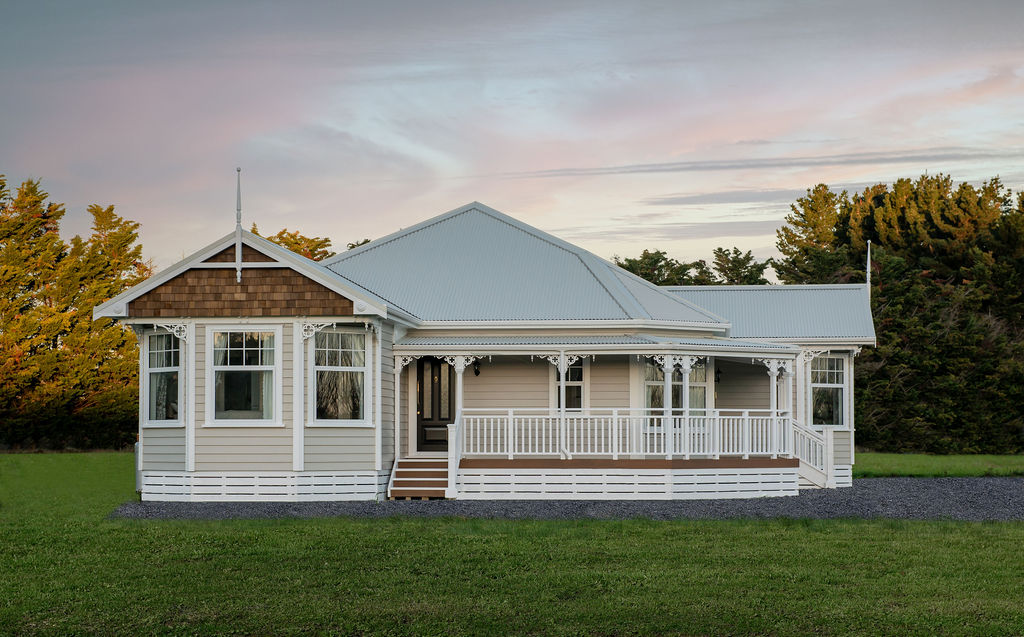
Choosing a section for a character home in NZ comes down to five checks: services at the boundary, sound ground, buildable access, orientation for sun, and paperwork that permits the style you want. The last one surprises people most — many modern subdivisions carry design covenants that can rule out a weatherboard character design before you've drawn a thing.
The section decides more of your new build than the plan does: its ground sets the foundation bill, its width nudges you between villa and bungalow, and its covenants decide whether character is allowed at all. Here's what to check, in the order it bites.
Choosing a section for a new build in NZ: the five checks
| Check | Why it matters | What to look at |
|---|---|---|
| Services | Connections are invisible budget — long runs cost real money | Power, water, wastewater, stormwater, fibre at or near the boundary |
| Ground | Foundations follow ground conditions, and so does their price | Geotech report, fill history, drainage, flood maps |
| Access & contour | Slope and tight access add cost before the house begins | Construction access, retaining needs, driveway gradient |
| Orientation | Character homes live on their verandahs and front rooms | Where north is relative to the street and living areas |
| Paperwork | Covenants and overlays can veto the style or the plan | Covenant schedule, easements, district plan zoning and overlays |
None of these are deal-breakers on their own — they're pricing signals. A flat, serviced, road-fronting section is the cheap case; every departure from it is a line in the budget, as covered in building a character home on a budget.
Covenants: the character-home trap in new subdivisions
Design covenants exist to keep a subdivision looking consistent — and in many newer developments, consistent means contemporary. Minimum floor areas, approved cladding lists and design-review clauses can all collide with a villa or cottage design. This isn't a reason to avoid subdivisions; it's a reason to have your solicitor pull the title and covenant schedule before going unconditional, and your builder confirm the design you want will pass. Heritage Homes builds new villas, bungalows and cottages across New Zealand and can check a covenant schedule against a specific design before you go unconditional. Older established suburbs rarely carry them; newer rural and lifestyle subdivisions often have covenant schedules of their own — so check the title regardless of setting.
Ground, slope and access: where section budgets go quiet
Two sections that look identical from the road can be tens of thousands of New Zealand dollars apart underneath (indicative). Fill, soft ground and high water tables change foundation design; slope brings retaining and driveway engineering; tight access slows every delivery for the whole build. A geotechnical report before purchase — or at minimum a builder's walk-over — converts these unknowns into numbers while you can still negotiate or walk away.
Orientation: point the verandah at the sun
Character homes concentrate their living on the front rooms and verandah, so a section that lets those face north works with the design instead of against it. A north-facing street frontage is the classic villa setup; a north-facing rear suits a bungalow opening to the garden. South-facing living is fixable with a plan flip — but it's better priced into the section decision than discovered after it.
Section width and the villa-or-bungalow question
Width nudges style. Villas evolved on narrow urban sections and look right on them; bungalows spread lower and wider and want the room to do it. If you've found the section first, let it cast a vote on the style — the trade-offs are in villa vs bungalow, compared. And because consent and design time runs months, locking the section early keeps the whole programme moving — see how long a new build takes in NZ.
Frequently asked questions
What should I check before buying a section in NZ?
Five things before you sign: services (power, water, wastewater, fibre at the boundary or priced to get there), ground (geotech report or nearby bore data), access for construction, orientation for sun, and the fine print — covenants, easements and any overlays on the title and district plan. A builder's walk-over before purchase is cheap insurance.
Do subdivision covenants allow character-style homes?
Not always. Many new subdivisions carry design covenants specifying minimum floor areas, cladding types or a contemporary look, and some effectively rule out weatherboard character designs. Read the covenant schedule before you buy — and if character is the goal, have your builder confirm the design passes before going unconditional.
Is a sloping section much more expensive to build on?
Usually, yes. Slope adds foundations, retaining, access and drainage cost before the house itself starts — commonly tens of thousands of New Zealand dollars, depending on severity (indicative, 2026). Character designs handle gentle slopes gracefully with raised floors and verandahs, but a steep site deserves engineering advice before purchase.
Do I need a geotech report before buying a section?
Strongly recommended, and sometimes required: councils commonly ask for geotechnical information with a building consent, and lenders may too. On land with fill, soft ground or slopes it's essential — foundation design (and cost) follows the ground conditions.
What section frontage suits a villa-style home?
A compact street frontage with depth behind it. Villas were designed to present narrow to the road with rooms running back down a central hallway, so they sit comfortably on urban sections that would feel tight for a wider design. Orientation matters as much as dimensions — a north-facing frontage or rear yard lets the verandah and main living rooms follow the sun.
Walk a section with us before you buy
Prefer to talk? Call Heritage Homes on 0508 40 30 20 or email sales@hhomes.nz.